

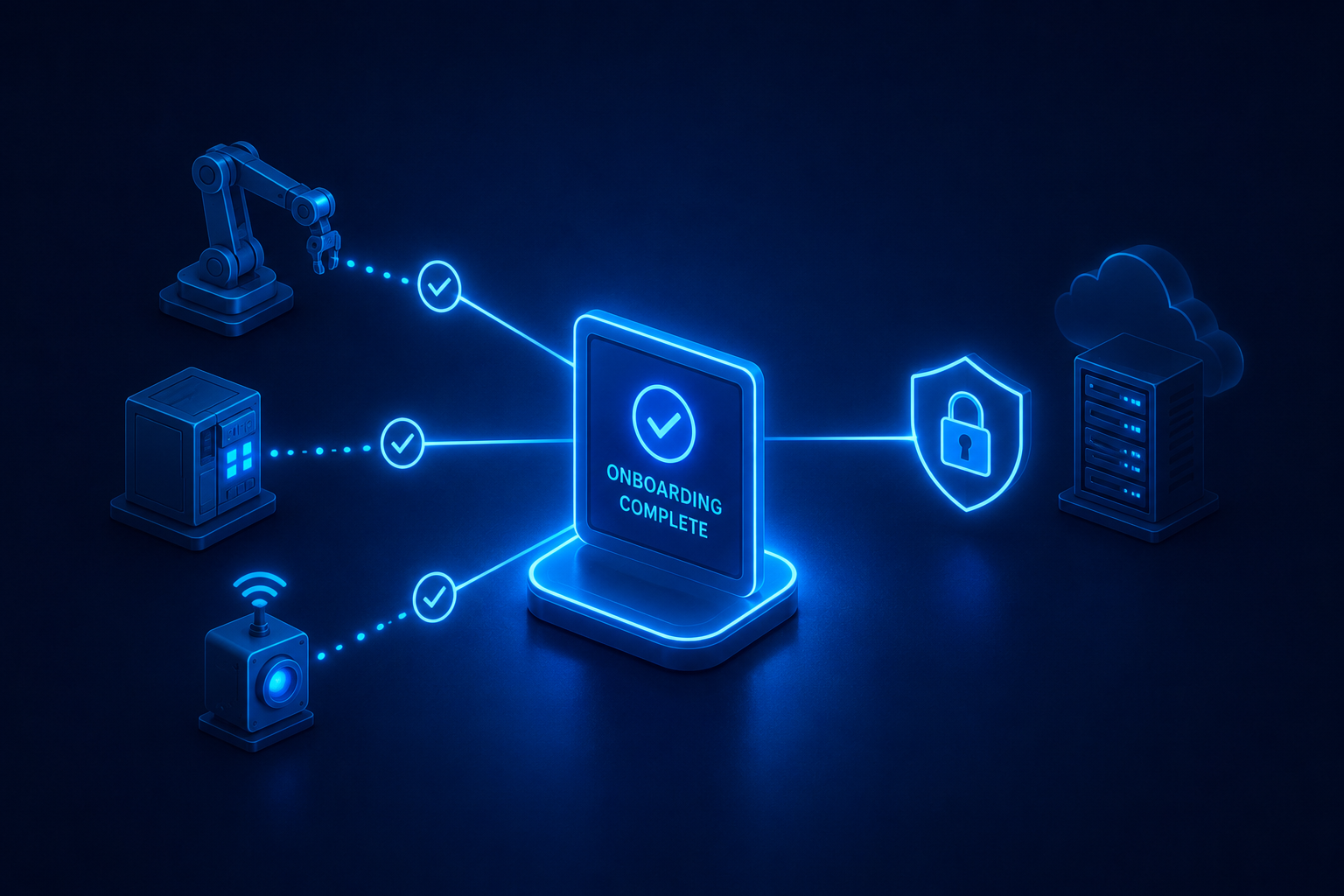
Zero-Touch Onboarding in Industrial IoT: Why manual device onboarding no longer scales
Zero-Touch Onboarding in Industrial IoT: Why manual device onboarding no longer scales
Zero-Touch Onboarding in Industrial IoT: Why manual Device onboarding no longer scales
What Is Zero-Touch Onboarding?
Zero-Touch Onboarding and Provisioning — What's the difference?
Provisioning and Zero-Touch Onboarding are often mentioned together and sometimes used interchangeably. In reality, they describe two distinct steps.
Provisioning prepares a device technically for deployment. This includes installing software, loading configurations and certificates, and applying basic system settings.
Provisioning prepares a device. Zero-Touch Onboarding makes it part of the existing infrastructure.
What Zero-Touch Onboarding require?
Zero-Touch Onboarding only works reliably when several technical components work together seamlessly. Each one handles a specific task. From establishing a unique device identity to applying the final configuration.
Device identity
Every device needs a unique, cryptographically secured identity. Without it, the system has no way to reliably recognize the device when it first powers on and trigger the onboarding process.
Trusted communication
Using a Public Key Infrastructure (PKI), the device proves its identity. Only once this verification is successful does it receive the required certificates and gain the ability to communicate securely with other systems.
Automatic assignment
Once the identity has been confirmed, the system automatically assigns the device to the right infrastructure and the appropriate operator. This means manufacturers can produce and ship devices without knowing their final deployment location at the time of manufacturing.
Automatic configuration
After assignment, the device automatically receives all required configurations and policies. In many architectures, a Device Management Platform handles this step as soon as the device has been registered and assigned to the correct operator.