

What is a digital identity in Industrial IoT and why is it important?
What is a digital identity in Industrial IoT and why is it important?
What is a digital identity in Industrial IoT and why is it important?
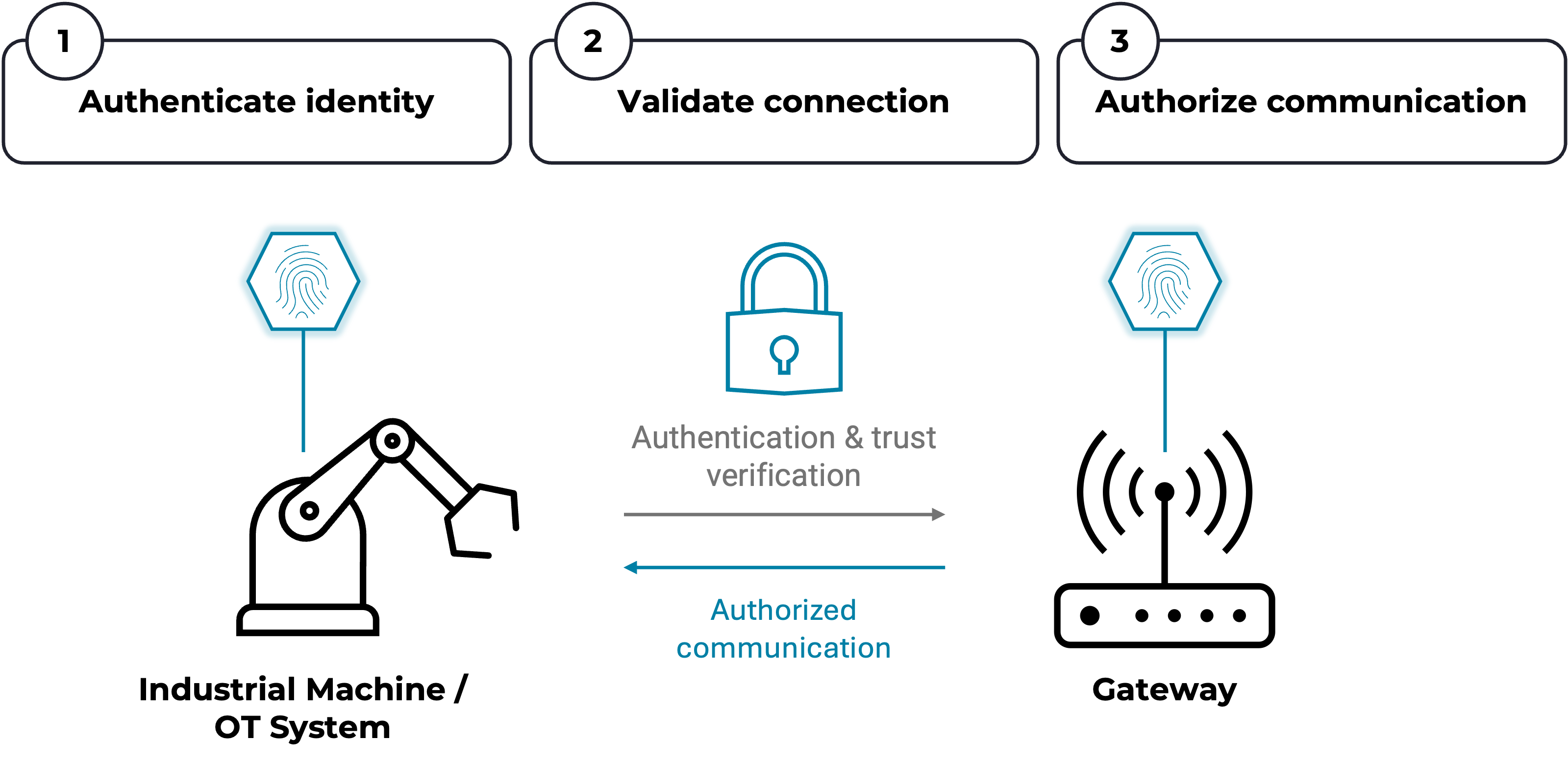
What is a digital identity in Industrial IoT?
a cryptographic key pair stored in the device
a digital certificate that uniquely binds the identity
a trusted certificate authority
can prove its identity cryptographically
establishes encrypted connections
ensures the integrity of transmitted data
Why digital identities are crucial for security and operations in the Industrial IoT
In connected industrial environments, manufacturers access systems remotely, status data is transmitted to central platforms, and machines communicate across locations.
This creates a new requirement: communication must be clearly identifiable and automatically controllable.
Without digital identities, access may work technically—but during operation, it becomes impossible to trace which system performed a specific action. Permissions are handled manually, and audits require significant effort to reconstruct events.
Digital identities close this gap. They make communication verifiable and controllable—independent of network boundaries.
This establishes the foundation for secure and efficient operation of connected systems, with direct impact on day-to-day production:
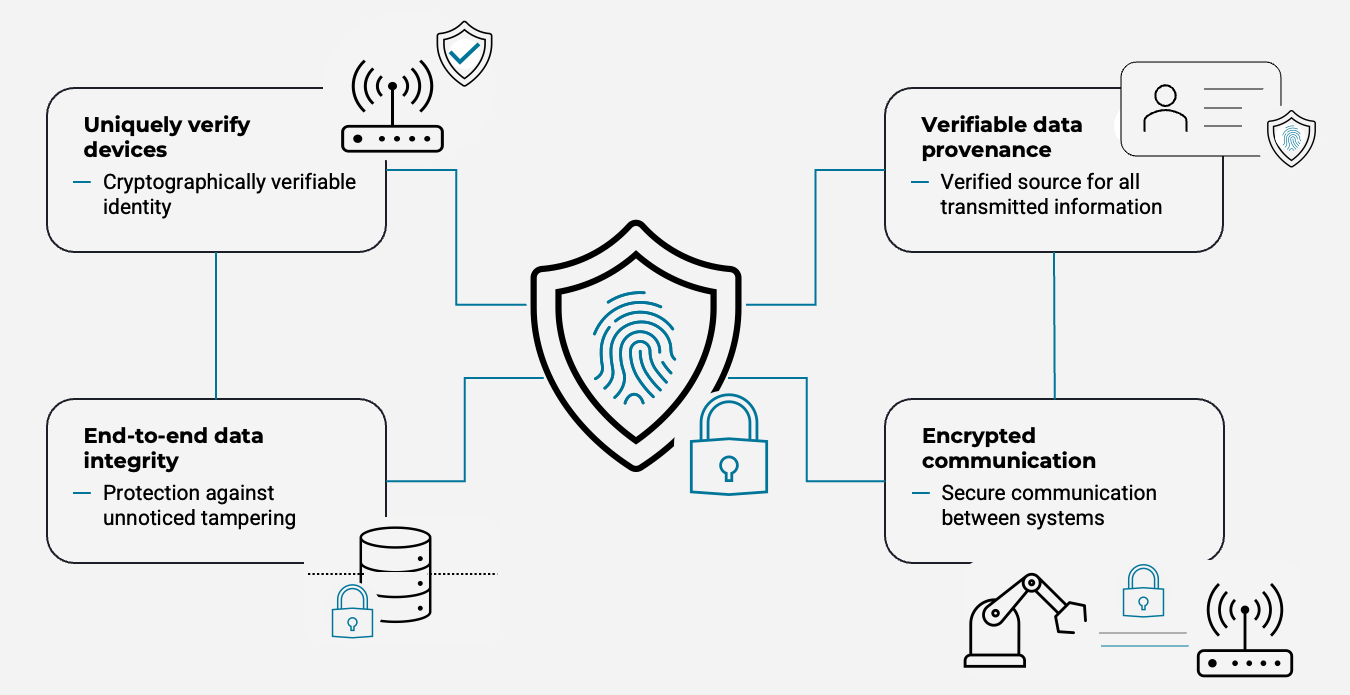
Secure machine communication
Only devices with verified identities can exchange data. Unauthorized participants are automatically excluded.
Unique access control
Access is no longer based on network location or shared credentials, but tied to the identity of each system. Every action remains traceable.
Reliable production data
Data is only trustworthy if its source is verified. Digital identities ensure that production and status data originate from authenticated systems.
Scalable integration of new devices
New machines and software services are integrated via their identity—without complex, manual security approvals. For production managers, this means less coordination effort and significantly faster onboarding.
Economic benefits of digital identities in Industrial IoT operations
The technical foundation of trust has a direct impact on the stability of production environments.
The technical foundation of trust has a direct impact on the stability of production environments.
When communication can be clearly identified and automatically verified:
the risk of unplanned downtime due to misconfigurations or unclear access is reduced
new machines can be integrated much faster
remote service becomes possible without introducing additional production risks
multiple sites can be operated using a consistent model
Verifiable trust thus becomes a prerequisite for stable and economically scalable system operations.
End-to-end security architecture in the Industrial IoT through digital identities
automatically and reliably deploy new systems
manage devices consistently throughout their entire lifecycle
securely integrate additional services into existing environments
Conclusion: Digital identity as the foundation for a secure and controllable Industrial IoT
verify communication between machines end-to-end
clearly assign and control access
ensure that data originates from a trustworthy source
operate networked architectures in a consistently manageable way
- What is a digital identity in Industrial IoT?
- Why digital identities are crucial for security and operations in the Industrial IoT
- Economic benefits of digital identities in Industrial IoT operations
- End-to-end security architecture in the Industrial IoT through digital identities
- Conclusion: Digital identity as the basis for a secure and controllable Industrial IoT